
Clinical Care
The clinical care environment within the Tampa Medical & Research District (TMRD) is built on a uniquely integrated model where patient care, academic medicine, and research operate in close coordination. Bringing together some of the best and brightest minds in medicine, science, biochemistry, engineering, mathematics and beyond, the TMRD features several renowned healthcare and academic institutions, including Tampa General Hospital (TGH), the University of South Florida (USF) Health Morsani College of Medicine, and others. With hundreds of active clinical trials, it is a system designed to connect discovery, validation, and delivery so new ideas can move into practice more quickly and effectively.
Tampa General Hospital at a glance:
- #1 hospital in Tampa Bay and ranks among the top 50 hospitals nationwide in six specialties (U.S. News & World Report 2025-26)
- #1 health system on Florida’s West Coast and one of the top 100 in the nation (Newsweek)
- Trains over 800 residents & fellows, with over 70 residency & fellowship programs
- Region’s ONLY American College of Surgeons-verified Level I trauma center for adults and children
- Top 5 transplant center in the nation
University of South Florida (USF) Health Morsani College of Medicine at a glance:
- Tier 1 medical school for research (U.S. News & World Report 2025-26)
- Top 16 medical school in the nation (U.S. News & World Report 2025-26)
- #1 medical school in the country for education (Center for Accountability in Medicine)
Clinical Strength at Scale
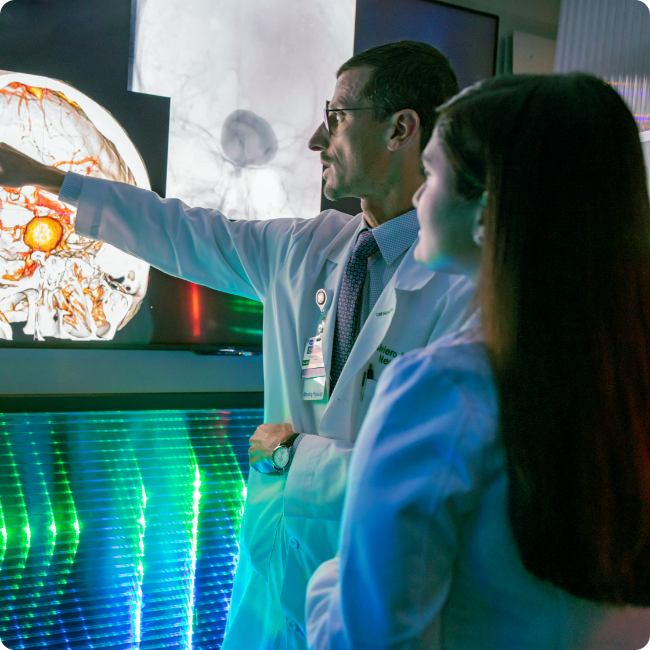
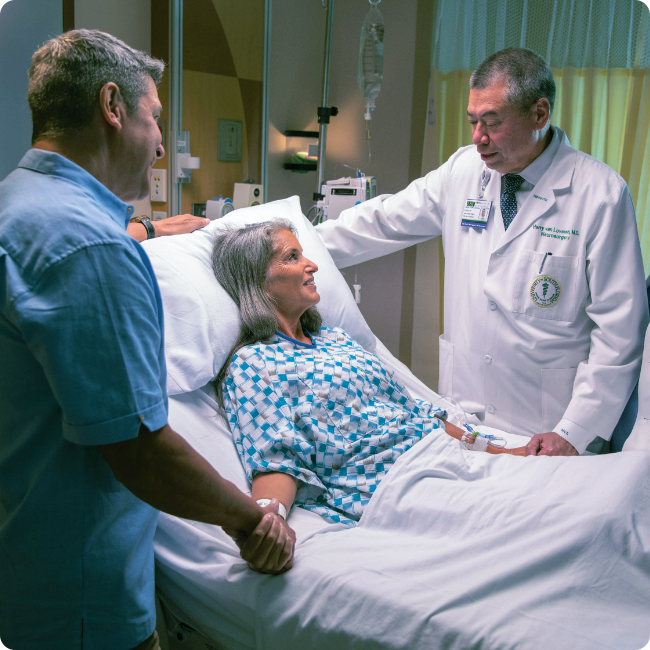
Depth of Specialties and Clinical Capability
A Collaborative Model for Innovation
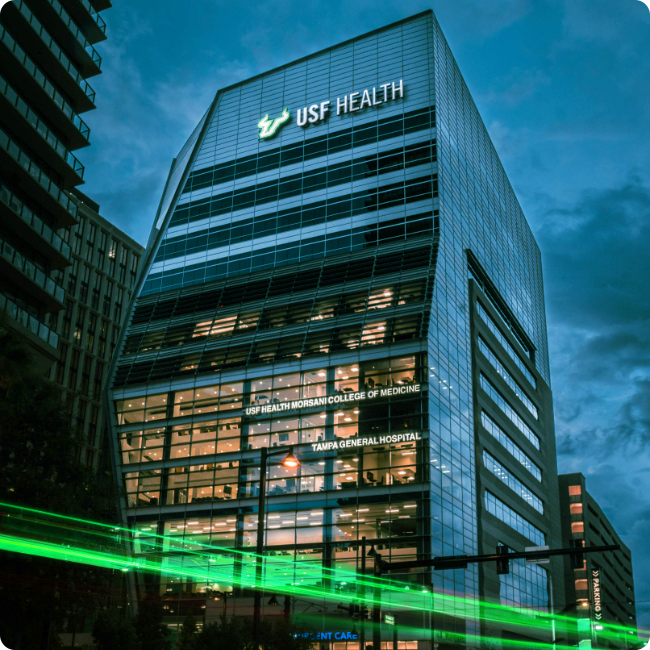
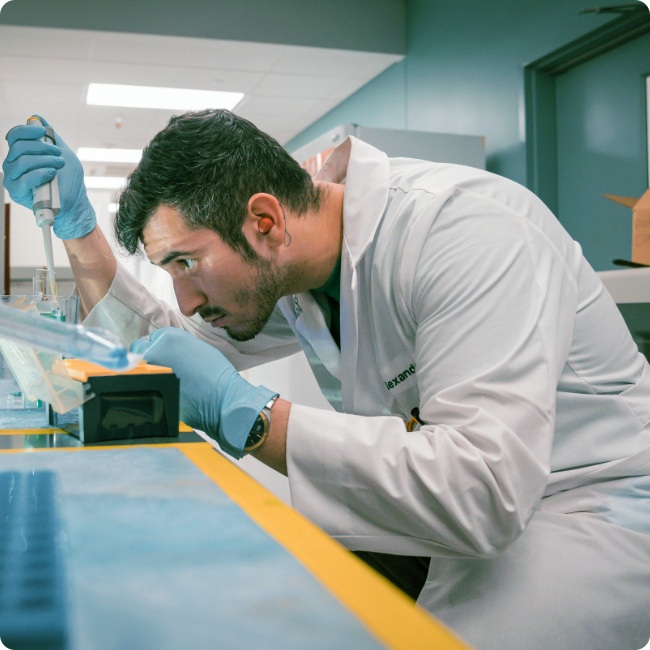
Leading Research Ecosystem
Research within TMRD is both robust and highly integrated, creating a direct pathway from discovery to real-world application. Foundational research begins within USF’s ecosystem, supported by significant federal funding and institutional investment, and advances through clinical validation across TGH and affiliated programs. Clinical trials are embedded directly within the care setting, allowing patients to access emerging therapies while enabling researchers and industry partners to test, refine, and validate new approaches in real time. This continuous feedback loop accelerates the movement from bench to bedside, positioning the district as an efficient and impactful engine for translational research.